
Professional Services
·
July 25, 2026
Project Management Career Path: Roles, Salary & PMP
The project management career path spans entry roles, PMP certification specs, median wages, and executive progression tiers.

Esthetician vs cosmetologist comparison: master the differences in 2026 training, licensing requirements, daily work environments, and salary potential.

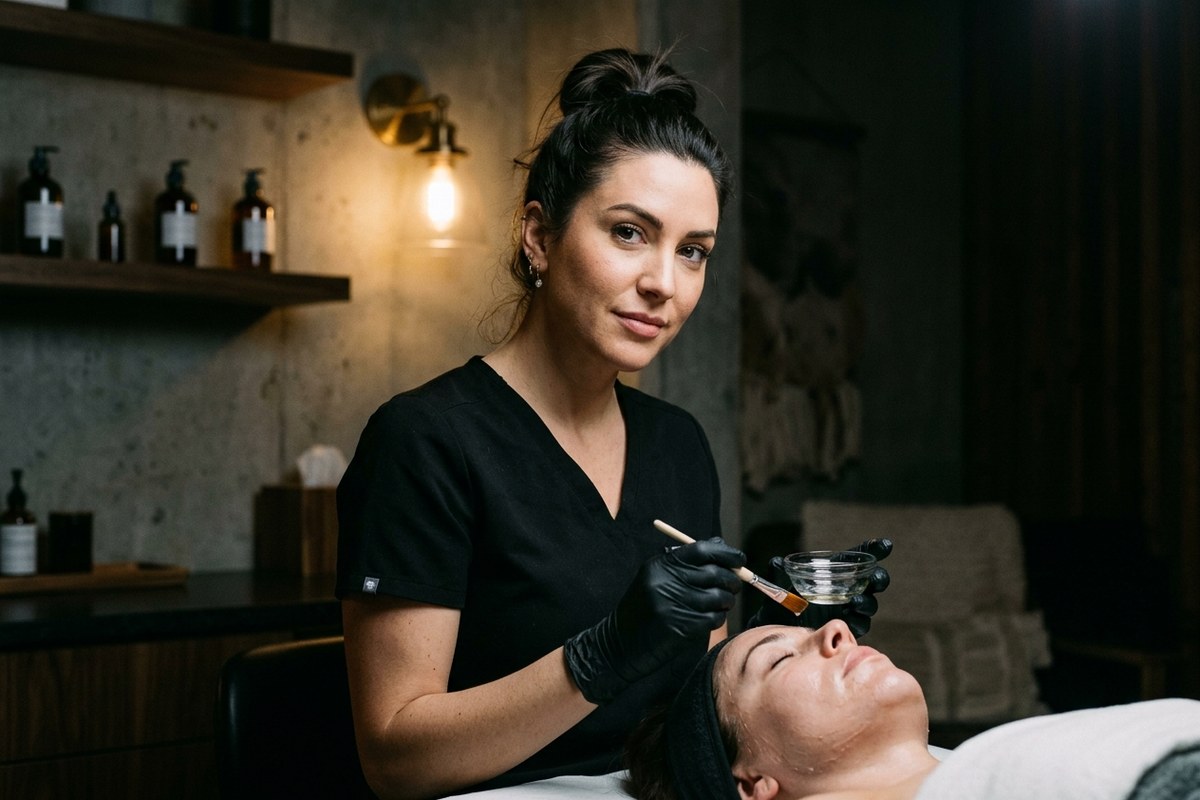
Deciding on a career path in the beauty and personal care industry requires a clear understanding of the educational, financial, and practical differences between specialized roles. In 2026, the demand for licensed beauty professionals is stronger than ever, driven by consumers spending billions of dollars annually on wellness, self-care, and advanced grooming treatments. Aspiring professionals must choose between two primary tracks: focusing deeply on skin health as an esthetician, or mastering a broad range of hair, nail, and skin services as a cosmetologist.
This comprehensive esthetician vs cosmetologist comparison provides an in-depth analysis of educational pathways, licensing requirements, salary expectations, and market trends. For those preparing to enter the job market, utilizing an advanced resume building tool can streamline the application process by ensuring your credentials align with modern industry standards. This guide will help you weigh the structural differences of each profession so you can invest your time and tuition dollars into the career path that best fits your long-term professional goals.
An esthetician is a licensed professional who specializes exclusively in skin care, skin health, and non-medical skin therapies. The scope of practice for an esthetician focuses heavily on the epidermis, the outermost layer of the skin, with the primary objective of maintaining skin health, improving skin texture, and addressing specific cosmetic skin concerns. According to the Associated Skin Care Professionals, the modern esthetician acts as a skin health consultant, performing complex skin analyses, customized facials, microdermabrasion, chemical peels, and body treatments.
Daily operations for an esthetician include manual and mechanical extractions, eyebrow shaping, eyelash tinting, full-body waxing, and lymphatic drainage massages. Advanced practitioners also operate specialized equipment for high-frequency treatments, microcurrent therapies, and LED light therapies. Crucially, because their scope of practice is limited to cosmetic procedures, estheticians cannot diagnose medical skin conditions: instead, they refer clients to dermatologists when they identify abnormal moles, severe acne cystic lesions, or signs of skin disease. To present these technical skills effectively to premium employers, candidates should utilize a targeted professional esthetician resume template during their job search.
A cosmetologist is a broad-scope beauty specialist licensed to perform cosmetic services across hair, skin, and nails. Unlike an esthetician, whose focus is singular, a cosmetologist is trained in a wider variety of treatments, with hair services making up approximately 80 percent of the typical curriculum and daily practice. The Professional Beauty Association defines the cosmetologist as an all-encompassing beauty professional who provides hair cutting, styling, coloring, chemical texturizing, manicures, pedicures, basic skin treatments, and makeup application.
On any given day, a cosmetologist may formulate custom hair dye, perform precision haircuts, execute chemical straighteners, apply acrylic nails, and perform basic facial waxing. This versatility allows them to work in full-service salons, multi-disciplinary spas, fashion environments, and film sets. Because their training covers multiple disciplines, cosmetologists enjoy a broad operational scope, though they rarely study advanced skincare modalities with the same clinical depth as dedicated estheticians.
The academic paths for esthetics and cosmetology differ significantly in course duration, cost, and curricular focus. According to training data compiled by beauty education authority Milady, esthetician programs typically require around 650 hours, while cosmetology programs average 1,400 to 1,600 hours of instruction. These requirements vary by state, with some states requiring as few as 250 hours for esthetics, while others require up to 1,000 hours, and cosmetology programs ranging up to 2,000 hours in states like Iowa or South Dakota.
An esthetician curriculum is heavily rooted in skin biology, cosmetic chemistry, and anatomy. Students spend hundreds of hours studying the structure and functions of the skin, skin disorders, ingredients in skincare products, sanitation protocols, and facial massage techniques. In contrast, a cosmetology curriculum allocates the majority of its hours to trichology (the study of hair and scalp), hair coloring chemistry, permanent waving, hair design, and nail anatomy. While a cosmetology student will take a basic skin module, it usually constitutes only 100 to 150 hours of their total education, leaving them less prepared for advanced clinical skincare settings.
Regardless of the path chosen, completing school is only the first step. To legally practice, candidates must navigate the beauty industry licensing 2026 standards, which require passing a rigorous two-part state board examination. This process consists of a written theory exam, testing knowledge of chemistry, anatomy, electricity, and sanitation laws, alongside a timed practical exam where candidates must demonstrate hands-on safety, disinfection, and service execution under the eyes of state examiners.
For individuals pursuing the skin-only route, learning how to become a licensed esthetician involves mastering infection control, client protection, and specific skincare application steps. For those pursuing the broader license, understanding how to become a cosmetologist requires practicing hair draping, chemical thermal styling, hair cutting, and nail safety procedures. Licensing is state-specific, meaning that if you move to a different state, you must apply for reciprocity, which may require taking additional training hours if your original state had lower hourly benchmarks.
To help you visual the differences between these two pathways, the table below outlines the core parameters of both careers. This includes educational timelines, primary work environments, core competencies, and licensing expectations for 2026.
Understanding the earning potential of these beauty paths is essential before committing to tuition fees and licensing exams. According to the Bureau of Labor Statistics, the median hourly wage for skincare specialists was $19.98 in May 2024. This base figure translates to an annual salary of approximately $41,560 for full-time professionals, though it is important to note that this represents base hourly wages and often excludes tips, product commissions, and independent business earnings.
When analyzing esthetician vs cosmetologist salary data, cosmetologists often show a similar baseline median wage of around $18.50 to $20.00 per hour. However, the earning structures for both professions are highly variable. Because cosmetologists can perform a wider range of high-frequency services (like hair coloring, which often commands $150 to $300 per session), they can build a high-volume client base quickly. Conversely, estheticians in medical spas or high-end clinics can command premium pricing for advanced skin rejuvenation treatments, with individual sessions ranging from $120 to $400, depending on the technology used.
Several critical variables determine whether a beauty professional earns a basic hourly rate or climbs into a six-figure income bracket. The first major factor is the employment model. W-2 employees receive an hourly wage or a commission split (typically ranging from 40 percent to 60 percent of service revenue). Booth renters or independent salon suite owners pay a weekly flat rent (ranging from $150 to $400) and keep 100 percent of their service and retail revenues. While independent business ownership offers the highest income cap, it requires significant business management, marketing, and client retention skills.
Gratuity and retail sales commissions also dramatically alter your take-home pay. Standard service tips average 15 percent to 20 percent of the total ticket price. Additionally, most top-tier salons and medical spas offer a 10 percent to 15 percent commission on professional retail sales. An esthetician who averages $200 in retail skincare recommendations daily can add an extra $5,000 to $10,000 to their annual income. Geographic location remains another key factor: metropolitan areas like New York, Los Angeles, Chicago, and Miami report average earnings that are 25 percent to 40 percent higher than rural municipalities.
The consumer demand for personal care services is driving positive employment numbers across both fields. For instance, employment of skincare specialists is projected to grow 7 percent from 2024 to 2034, which is faster than the average growth rate for all occupations, according to data from the Bureau of Labor Statistics. This growth is fueled by an aging population seeking non-invasive anti-aging procedures and a younger demographic prioritizing skin barrier health and preventive skincare regimens.
The cosmetologist job outlook is also stable, with a projected 4 percent to 6 percent growth rate over the same ten-year period. While hair services remain a permanent staple of personal grooming, the market is seeing a shift from traditional monolithic salons to independent salon suites and mobile beauty applications. This means that while traditional salon jobs are evolving, the overall demand for qualified, licensed hair and beauty professionals remains secure in a variety of business formats.
The beauty landscape in 2026 is defined by technological integration and clinical hybridization. For estheticians, the fastest-growing sector is medical esthetics, where professionals work alongside dermatologists, plastic surgeons, and medical directors in medical spas. This allows licensed estheticians to perform advanced treatments like laser hair removal, intense pulsed light (IPL) therapies, radiofrequency skin tightening, and microneedling. These high-tech services yield much higher profit margins and ticket prices than traditional facials.
On the cosmetology side, the experience economy has forced salons to adopt digital platforms for scheduling, custom color formulation, and virtual consultations. Cosmetologists in 2026 must be adept at using customer relationship management (CRM) software to track client history, manage online reviews, and leverage social media platforms like Instagram and TikTok as their primary digital portfolios. Additionally, there is a growing demand for sustainable, clean, and organic color lines, which requires professionals to stay educated on green chemistry and safe salon ventilation standards.
For hiring managers at high-end spas, medical clinics, and upscale salons, a candidate's formal credentials are the first barrier to entry. Your state-issued license must be prominently featured at the very top of your professional resume, including the license number, the issuing state board, and the expiration date. Because hiring managers use applicant tracking systems (ATS) to filter out unlicensed applicants, failing to list your active state credentials clearly can result in automatic rejection before a human ever reviews your portfolio.
When applying for positions, it is critical to tailor your resume to the specific business model of the target employer. A medical spa will search for terms like medical sanitation, OSHA compliance, skin analysis, and laser certification. A high-end hair salon will look for terms like balayage, corrective color, client retention, and product sales metrics. Utilizing an optimized resume structure designed specifically for your branch of the industry ensures your application highlights these crucial keywords and catches the eye of hiring decision-makers.
Beyond the baseline license, hiring managers are looking for professionals who can immediately generate revenue. They look for specialized certifications that prove you can perform advanced services without requiring extensive on-the-job training. For estheticians, certifications in manual lymphatic drainage, oncology esthetics, advanced chemical peels, or dermaplaning are highly attractive. For cosmetologists, certified skills in hand-tied extensions, keratin treatments, or complex color correction procedures are major differentiators.
Additionally, soft skills are just as important as technical abilities in the service industry. Managers want to see measurable achievements in client retention rates (such as maintaining a 75 percent or higher rebooking rate), retail sales growth, and customer service excellence. When structuring your work history, use specific numbers to quantify your achievements, such as "increased retail product sales by 22 percent over a six-month period" or "maintained an average client rating of 4.9 out of 5 across 300+ documented services."
Yes, in most states, a cosmetologist license is a broad-scope credential that legally permits you to perform both hair and skincare services, including facials and waxing. However, because cosmetology programs spend limited hours on advanced skin biology, many cosmetologists choose to take continuing education courses to build the technical confidence needed to work in specialized clinical spas.
An esthetician program typically takes 4 to 9 months to complete, depending on whether you enroll full-time or part-time. A cosmetology program is significantly longer, requiring 10 to 18 months of intensive study due to the higher volume of required training hours mandated by state licensing boards.
The earning potential of both paths is highly comparable and depends on your business model, location, and specialization. While cosmetologists can build steady, high-ticket hair-color clienteles, estheticians working in medical spas or operating independent skincare clinics with advanced technology can command top-tier rates that equal or exceed top salon earnings.
Maintaining your professional license requires renewing it with your state cosmetology board every 1 to 2 years. Depending on your state, you may be required to complete a set number of continuing education hours (typically 4 to 16 hours) focused on safety, sanitation, and updated state regulations before submitting your renewal fee.
Yes, pursuing a beauty license in 2026 is highly worthwhile due to strong consumer demand and positive employment growth. With a shorter training pathway than traditional college degrees and high demand for specialized wellness services, both programs offer a direct path to stable employment and independent business ownership.
Choosing between an esthetics and a cosmetology career path comes down to aligning your natural interests with the physical and educational realities of each profession. If you are fascinated by skin science, ingredients, clinical therapies, and working in a quiet, wellness-focused environment, the specialized esthetician track is your ideal match. If you prefer a fast-paced, highly creative environment where you can transform clients through hair, color, makeup, and nails, the broad-scope cosmetology route offers the dynamic career you are looking for. By understanding the distinct training demands, financial opportunities, and licensing rules of each path, you can confidently take the first step toward a successful, long-term career in the beauty industry.