
Professional Services
·
July 25, 2026
Project Management Career Path: Roles, Salary & PMP
The project management career path spans entry roles, PMP certification specs, median wages, and executive progression tiers.

A complete 2026 guide to becoming a cosmetologist: training hours, licensing exams by state, real salary figures, and how salons actually pay you.
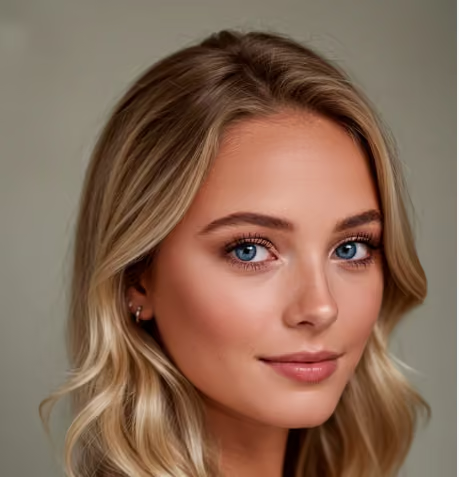

The professional beauty industry requires a balance of technical execution, chemical knowledge, and physical endurance. Pursuing a career in this sector involves navigating specific educational pathways, state-level licensing mandates, and shifting market trends. This guide outlines the precise steps required to enter and succeed in the beauty industry as a licensed professional.
Aspiring beauty professionals must understand the financial realities, educational commitments, and structural business choices that define this path. From selecting an accredited program to preparing for state exams and building a clientele, this guide provides a step-by-step roadmap to help you learn how to become a cosmetologist and launch a sustainable career.
A cosmetologist is a licensed professional trained in the cosmetic treatment of the hair, skin, and nails. While many consumers associate the role exclusively with haircutting, the modern license grants a broad scope of practice. A single comprehensive cosmetology license authorizes professionals to perform advanced chemical color formulation, chemical hair texturizing, manicures, pedicures, and basic aesthetic treatments including facials and superficial hair removal.
Stylists must master the chemical composition of permanent waves, hair relaxers, and oxidative dyes. This work requires precise knowledge of the pH scale and hair porosity to prevent chemical damage. Additionally, cosmetologists must perform nail anatomy assessments, basic skin analyses, and safe physical or chemical exfoliation. This broad training allows professionals to offer complete aesthetic transformations or specialize in a specific sub-discipline after graduation.
The daily routine of a cosmetologist is physically demanding and structurally organized around client appointments. Stylists typically stand for 8 to 10 hours per shift, performing repetitive hand, wrist, and shoulder movements. According to an ergonomic assessment published by the National Institutes of Health, 88% of cosmetologists report physical strain and musculoskeletal complaints due to the repetitive nature of their work. Managing this strain requires ergonomic footwear, proper posture, and regular station adjustments.
A typical workweek ranges from 30 to 50 hours and often includes evenings and weekends to accommodate client schedules. Between appointments, cosmetologists must maintain strict sanitation standards. They must disinfect non-porous tools with hospital-grade, EPA-registered disinfectants and sweep hair clippings immediately after every service. Stylists also use digital scheduling systems to manage appointments, track client formulas, and process payments throughout the day. Clear communication and time management are critical to keeping services on schedule.
According to May 2024 data from the U.S. Bureau of Labor Statistics, the national median annual wage for hairdressers, hairstylists, and cosmetologists is $35,250, which equates to an hourly rate of $16.95. The lowest 10% of earners bring in less than $24,050, while the top 10% of earners make more than $70,220 annually. This data reflects base hourly wages and commission rates reported by established salons, but it does not tell the whole story.
The federal database often excludes cash tips and independent business income, which can significantly increase a stylist's actual earnings. Total compensation depends on geographic location, salon business models, client retention rates, and service specialties. Stylists who perform high-ticket services, such as hand-tied hair extensions or complex color corrections, can earn significantly more than the national median. Building a loyal, recurring client base is the most reliable way to increase your income.
The U.S. Bureau of Labor Statistics projects a 5% employment growth rate for barbers, hairstylists, and cosmetologists from 2024 to 2034. This growth rate is about as fast as the average for all occupations. It is expected to create approximately 84,200 annual job openings over the decade. These openings will result from both industry expansion and the need to replace workers who retire or transfer to other occupations.
Consumer demand for specialty hair coloring, personalized skincare treatments, and advanced nail techniques continues to drive this growth. Additionally, the rise of salon-suite rental systems allows independent stylists to launch micro-businesses with lower overhead costs than traditional salons. This business model has expanded opportunities for entrepreneurial cosmetologists to control their pricing and service menus, which has changed the overall financial landscape of the profession.
To enroll in a state-approved cosmetology program, applicants must meet specific minimum education and age standards. Most state boards of cosmetology require students to hold a high school diploma or a General Educational Development (GED) credential. However, some states allow students who have completed the 10th grade to enroll in vocational training programs. Applicants must also submit a government-issued photo identification to verify they meet the minimum age requirement, which is usually 16 or 17 years old.
Prospective students must complete an enrollment application, pay a registration fee, and submit to a basic interview or admissions test. When researching schools, make sure the program matches the federal Classification of Instructional Programs tracking code for general cosmetology education. This classification is CIP Code 12.0401, managed by the National Center for Education Statistics. Programs with this designation follow structured curricula designed to prepare students for state-level licensing exams.
Selecting an accredited cosmetology school is essential for securing federal financial aid and qualifying for state licensing exams. National accrediting agencies, such as the National Accrediting Commission of Career Arts and Sciences (NACCAS), evaluate schools to ensure they meet high educational standards. Attending an accredited institution allows students to apply for federal Pell Grants and Direct Loans, which can help offset tuition costs.
Prospective students must evaluate the total cost of tuition, books, and student kits, which contain the professional shears, blow dryers, and mannequins required for classwork. Tuition fees can vary significantly. Programs at institutions that accept federal Title IV funding sometimes charge up to 78% more than non-Title IV community college programs. Students should compare local community colleges with private beauty academies to find the best balance of cost, graduation rates, and state board pass rates.
The time required to complete a cosmetology program depends on state licensing requirements and whether you attend full-time or part-time. Full-time programs typically require 35 to 40 hours of attendance per week, allowing students to graduate in 9 to 12 months. Part-time programs, which usually require 15 to 20 hours per week, can take anywhere from 18 to 24 months to complete.
State licensing boards set the specific training hours required for graduation. For example, state boards in New York and Massachusetts require a minimum of 1,000 school training hours to qualify for licensure examinations, according to guidelines from the National Interstate Council of State Boards of Cosmetology. Other states, such as California or Texas, require 1,000 to 1,500 hours of instruction. Students must complete all required hours before their school can certify them to take the state licensing exam.
The largest component of any cosmetology curriculum focuses on hair design, precision cutting, and chemical hair coloring. Students begin by learning hair anatomy, hair design principles, and how to analyze the scalp. They practice structural cutting techniques, including solid-form cuts, graduated cuts, and uniform layers, using scissors, razors, and clippers. Mastering these foundational techniques is essential before moving on to more complex, modern styles.
Color theory is another major focus of the curriculum. Students learn the differences between temporary, semi-permanent, demi-permanent, and permanent dyes. They study the chemistry of decolorizing and pigment formulation, learning how to select the right developer strengths to achieve consistent results. They also learn how to apply chemical relaxers and permanent waves, which requires precise timing and placement to keep the hair healthy.
The cosmetology curriculum also covers essential skincare and nail technology skills. The aesthetics module covers skin analysis, basic facial massage, manual extraction, and mechanical exfoliation. Students practice physical and chemical hair removal techniques, focusing on facial waxing, eyebrow shaping, and body tweezing. They also learn how to analyze different skin types to select appropriate products for their clients.
The nail technology portion of the program teaches students how to perform professional manicures and pedicures. Students learn how to shape nails, care for cuticles, and massage the hands and feet. They also learn how to apply advanced nail enhancements, including UV gel polishes, acrylic extensions, and nail tips. This training ensures graduates can offer a wide range of services once they enter the salon environment.
Before students can work on real clients, they must complete extensive training in safety, sanitation, and human anatomy. The curriculum covers bacteriology, virology, and pathology, teaching students how to identify contagious skin and scalp conditions that prevent service. Students learn how to clean, disinfect, and sterilize tools according to OSHA and EPA standards to prevent the spread of pathogens in the salon.
Students also study the anatomy of the head, face, neck, hands, and arms, focusing on the bone, muscle, and nerve networks involved in beauty services. The final portion of the program focuses on state board exam preparation. Students practice their skills in a supervised student clinic, working on real clients under the guidance of licensed instructors. This hands-on experience helps build confidence and prepares students for the practical portion of their licensing exam.
Every state requires cosmetologists to hold a valid professional license to practice. After completing your required training hours at an accredited school, you must submit an official graduation certificate to your state's board of cosmetology. The state board will review your training records to ensure you have met all educational requirements before authorizing you to schedule your exams.
Because licensing requirements vary by state, you must review the specific guidelines for your area. Ensuring your school is registered with your state board is essential for a smooth application process.
Most states use exams developed by the National-Interstate Council of State Boards of Cosmetology (NIC) to test candidates. This testing process consists of two parts: a written (theory) exam and a practical (hands-on) exam. The written exam is a computer-based test that covers sanitation, chemical safety, hair styling, skin care, and nail care. Candidates must understand scientific concepts, state laws, and safety regulations to pass this portion of the test.
The practical exam requires candidates to perform a series of beauty services on a mannequin head or a live model in front of an evaluator. Candidates are graded on their sanitation practices, tool handling, and technical execution across services like haircutting, chemical waving, and hair coloring. Total exam fees range from $30 to over $390, depending on your state. Candidates should use official NIC study guides and practice tests to prepare for both exams.
A cosmetology license must be renewed periodically, typically every 1 to 2 years, depending on the state. To renew their license, cosmetologists must submit a renewal application and pay a state fee. Many states also require licensed professionals to complete a set number of continuing education (CE) hours during each renewal cycle.
Continuing education requirements usually focus on sanitation, state laws, and safety, though some states allow hours dedicated to advanced technical skills or business management. Stylists must keep records of their completed CE certificates in case of a state board audit. Failing to renew your license on time can result in late fees, disciplinary action, or temporary suspension of your right to practice.
Newly licensed cosmetologists often begin their careers as W-2 employees in established salons. Under this model, stylists are paid either an hourly base wage or a percentage of the service revenue they generate, which typically ranges from 40% to 60%. The salon owner provides the workstation, backbar back supplies, styling products, reception support, and marketing to bring in new clients.
This model offers lower financial risk for new professionals who do not yet have a loyal client base. However, employees must follow the salon's scheduled hours, dress code, and pricing structures. While this model limits your earning potential compared to independent business ownership, it provides valuable stability, mentorship, and retail commission opportunities as you build your skills.
Experienced cosmetologists with a loyal client base often transition to independent business models, such as booth or suite rentals. Under a 1099 independent contractor agreement, the stylist rents a chair or private suite from a salon owner for a flat weekly or monthly fee, which typically ranges from $400 to $600. The stylist keeps 100% of their service and retail revenues after paying their rent and business expenses.
While this model offers complete schedule flexibility and control over your pricing, it also comes with significant business responsibilities. Independent stylists must purchase their own tools, backbar products, professional liability insurance, and booking software. They are also responsible for managing their own business accounting, quarterly taxes, and marketing campaigns. This model is best suited for experienced professionals with a stable, recurring client base.
The beauty industry is increasingly adopting artificial intelligence to personalize the client experience. In modern salons, AI-powered diagnostic tools analyze a client's hair density, scalp health, and skin hydration using high-magnification cameras. These diagnostics allow stylists to recommend highly customized treatments and take-home care routines based on precise, objective data rather than visual estimation alone.
Additionally, virtual reality and augmented reality platforms allow clients to try out hair colors and cuts digitally before any service begins. Stylists use tablet-based applications to show clients how a specific shade or haircut will look on them. These tools help align expectations, reduce miscommunications, and build trust during the initial consultation process.
Consumer demand for clean, sustainable, and vegan beauty products has changed salon operations. Modern clients increasingly seek out salons that use ammonia-free color lines, biodegradable foils, and cruelty-free styling products. Stylists must understand the chemistry of these alternative formulations to deliver high-quality results without relying on traditional, harsh chemicals.
Salons are also adopting green business practices, such as partnering with recycling programs to repurpose hair clippings, leftover color, and aerosol cans. Stylists who educate themselves on sustainable beauty practices can attract eco-conscious clients and position themselves as forward-thinking professionals in a competitive market.
In today's market, social media platforms like Instagram and TikTok serve as a stylist's primary portfolio. Potential clients rarely search traditional directories; instead, they browse hashtags and video reels to find local stylists who specialize in the exact look they want. Cosmetologists must consistently document their work with high-quality before-and-after photos and video tutorials to showcase their expertise.
Building an online brand requires a professional aesthetic, clear descriptions of your services, and direct links to your online booking system. Stylists must also engage with their followers by answering beauty questions, sharing hair care tips, and participating in industry trends. This direct-to-consumer marketing allows professionals to build a full schedule without relying solely on salon walk-ins.
When hiring new talent, high-end salon managers look for technical skill, professionalism, and a strong work ethic. Candidates must demonstrate a valid state license and a thorough understanding of sanitation laws. Managers also look for stylists who are eager to learn and willing to assist senior staff to master advanced techniques.
Additionally, salons value candidates with strong customer service and sales skills. Stylists who can suggest retail products, pre-book future appointments, and retain clients are highly valuable to any business. Holding certifications in popular specialty services, such as tape-in extensions or advanced smoothing treatments, can also give you a significant advantage in the hiring process.
To secure an interview at a top salon, your resume must highlight your technical training, customer service experience, and key accomplishments. New graduates should detail their completed school hours, student clinic experience, and any specialized classes they took during their program. Focus on specific achievements, such as maintaining high retail sales or high client retention rates during school.
Those entering the beauty industry from other fields can use a Hair Stylist Career Path guide or a Beautician Resume Template to understand their transferable skills, such as client communication, time management, and business administration. Highlighting these professional skills helps show salon owners you can manage a busy schedule and deliver exceptional service from day one.
Along with a professional resume, you need a digital portfolio to showcase your technical abilities. Your portfolio should include high-resolution photos of your best work, organized by service type, such as balayage, precision cuts, updos, or nail art. Be sure to use consistent lighting and clean backgrounds to make your work look as professional as possible.
Host your portfolio on a dedicated website or a professional social media page, and include the link clearly on your resume. Salon owners want to see your progress and technical range, so include a variety of styles and hair types. A well-organized, visually appealing portfolio shows your passion for the craft and proves you can deliver high-quality results for your clients.
Completing a cosmetology program typically takes 9 to 12 months for full-time students and up to 2 years for part-time students. The exact timeline depends on your state's required training hours, which range from 1,000 to over 1,600 hours. After graduating, candidates must also pass both the written and practical state board examinations to receive their license.
To work in another state, you must apply for license reciprocity or endorsement through that state's board of cosmetology. Requirements vary, but most states require you to have an active license in good standing and equivalent training hours. If your home state required fewer hours, you may need to complete additional training or pass the new state's exams.
A cosmetologist is licensed to perform beauty services across hair, skin, and nails, with a primary focus on hair design and chemical treatments. An esthetician specializes exclusively in skin care, performing advanced facials, chemical peels, microdermabrasion, and body hair removal. Estheticians do not receive training in hair styling, hair coloring, or nail care services.
Most accredited cosmetology schools and state licensing boards require students to hold a high school diploma or a GED certificate for enrollment. However, some vocational schools and community college programs accept students who have completed at least the 10th grade. Prospective students should check the specific admission requirements of their chosen school and state board.
Tips typically add an additional 15% to 25% to a cosmetologist's total service revenue, depending on client satisfaction and the salon's price point. For a busy stylist performing $3,000 in weekly services, tips can add an extra $450 to $750 to their weekly earnings. These cash or digital gratuities serve as a significant source of immediate take-home pay.
Becoming a licensed cosmetologist requires technical dedication, physical stamina, and a strong commitment to safety and sanitation. By choosing an accredited program, mastering the core curriculum, and passing your state board exams, you can build a successful career in this dynamic field. Whether you choose to work as a salon employee or launch your own independent suite, consistent learning and a strong digital portfolio will help you build a loyal clientele and find long-term success behind the chair.