
Professional Services
·
July 25, 2026
Project Management Career Path: Roles, Salary & PMP
The project management career path spans entry roles, PMP certification specs, median wages, and executive progression tiers.

Learn how to become a laundry supervisor with insights on CLLM certification, OSHA and CDC standards, operational duties, and BLS salary projections.

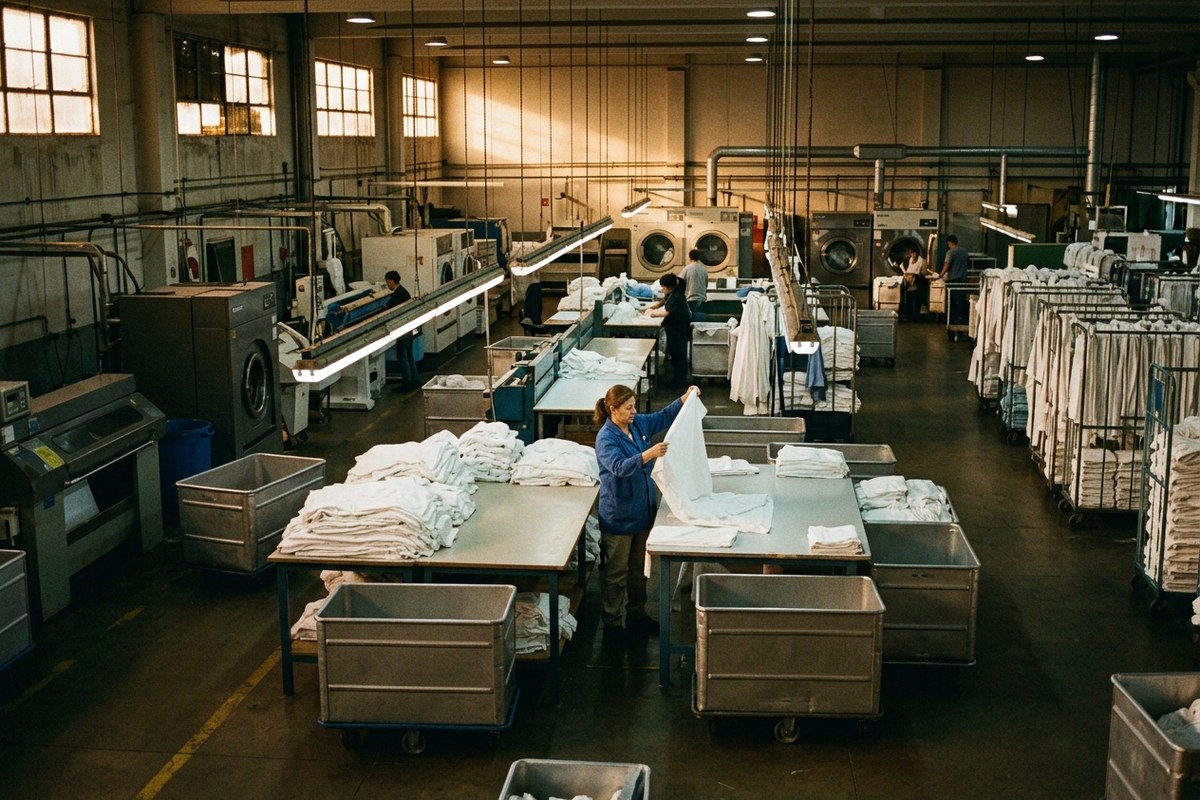
In commercial laundry and linen management, over 50,000 facilities across North America process more than 15 billion pounds of textiles annually. A laundry supervisor oversees daily washroom logistics, chemical titration levels, equipment maintenance, and staff productivity to ensure operational throughput exceeding 1,000 pounds of linen per labor hour. Facilities operating 24 hours per day rely on supervisory staff to maintain 98% on-time delivery rates while minimizing fabric damage and utility consumption.
Learning how to become a laundry supervisor requires mastering technical wash formulas, infection prevention protocols, and staff leadership across healthcare, hospitality, and industrial textile rental sectors. Candidates who enter the field must balance equipment efficiency with worker safety under strict federal standards. This comprehensive operational guide details required credentials like the Certified Laundry and Linen Manager designation, Occupational Safety and Health Administration regulations, salary benchmarks, and practical steps to secure a supervisory leadership position in textile management.
A laundry supervisor manages the daily operational flow of commercial washrooms, ensuring that dirty textiles move efficiently from receiving docks through sorting, washing, drying, finishing, and packing stages. Supervisors direct teams of 5 to 30 laundry attendants per shift, assigning staff to dedicated work stations based on daily processing quotas. In large facilities processing 50,000 pounds of linen daily, supervisors establish hourly production targets, monitor equipment utilization rates, and adjust labor allocation when equipment downtime occurs.
Supervisors oversee high-capacity washing equipment, ranging from 100-pound open-pocket washer-extractors to 12-module continuous batch tunnel washers processing 3,000 pounds per hour. They ensure operators load machines to 85% or 90% of rated capacity to achieve optimal mechanical action without overloading drive motors. Proper loading ratios prevent under-washing, which increases rewash rates above acceptable 2.0% thresholds, and prevent over-loading, which causes excessive fabric friction and mechanical wear.
Chemical dosing management forms a core component of daily supervision. Supervisors monitor automated peristaltic pump systems that inject liquid alkali builders, detergents, bleaches, antichlor sours, and fabric softeners into wash wheels. They test bath wash chemistry twice daily using titration kits to verify that alkaline wash steps maintain a pH between 10.5 and 11.5 for heavy soil removal, while final rinse steps sour down to a pH of 5.5 to 6.5 to prevent skin irritation for end users.
Linen distribution logistics require continuous tracking of clean inventory to prevent stockouts in guest rooms or patient wards. Supervisors manage PAR levels (Periodic Automatic Replacement), maintaining 3 to 5 full linen sets per bed or room to absorb volume spikes. They coordinate with hotel executive housekeepers and hospital material management directors to schedule 2 to 4 daily linen cart deliveries, logging weight tickets and tracking linen loss rates below 3% annually.
Shift leadership demands active supervision across diverse operating environments. In 24-hour healthcare plants, supervisors manage 8-hour rotating shifts to maintain continuous processing of isolation gowns and surgical drapes. In resort hotels with 1,000 rooms, supervisors align washroom schedules with peak 11:00 AM check-out times, ensuring 100% of bath towels and bed linens complete laundering before 3:00 PM check-in windows.
Quality control standards require laundry supervisors to inspect finished textiles for whiteness, residual odor, tensile strength, and moisture content. Supervisors perform daily spot checks on 50 to 100 folded items per production line, using reflection spectrophotometers to ensure whiteness indices remain above 85. When textiles display grey or yellow discoloration, supervisors audit water hardness levels, ensuring softening systems keep dissolved calcium carbonate below 17.1 parts per million (1 grain per gallon).
Infection prevention protocols govern all washing cycles in institutional facilities. Supervisors enforce minimum thermal exposure parameters, ensuring hot water wash steps maintain 160°F (71.1°C) for at least 25 consecutive minutes to kill vegetative pathogens. Alternatively, in low-temperature chemical bleaching cycles operating at 120°F (48.9°C), supervisors verify active chlorine bleach concentrations between 50 and 150 parts per million to achieve 99.999% bacterial reduction.
Stain classification and fabric reclamation procedures preserve linen inventory value. Supervisors train attendants to separate stained linens into distinct reclamation wash formulas containing specialized enzymes, rust-removing oxalic acids, or emulsifying solvent boosters. By maintaining structured reclamation programs, supervisors recover up to 80% of damaged linens, saving facilities tens of thousands of dollars in annual linen replacement costs.
Candidates researching career options across industrial, service, and medical sectors often review role-specific resume templates by industry to align their technical washroom expertise with target employer requirements.
While entry-level supervisor positions require a high school diploma or GED equivalent, major institutional facilities prefer candidates with an associate degree in business administration, hospitality management, or industrial engineering. Higher education coursework in accounting, supply chain logistics, and organizational leadership prepares supervisors to manage operational budgets exceeding $1,000,000 annually and oversee complex labor schedules.
The Certified Laundry and Linen Manager (CLLM) credential, issued by the Association for Linen Management (ALM), represents the industry benchmark for supervisory expertise. Candidates preparing for the CLLM examination study core disciplines including textile identification, washroom chemistry, infection control, linen distribution, equipment engineering, and safety compliance. Earning this designation demonstrates mastery of commercial laundry systems and increases promotional eligibility by 35% across commercial and healthcare facilities.
To earn the CLLM credential, candidates must pass a 150-question multiple-choice examination covering 6 technical modules. Maintaining the Certified Laundry and Linen Manager (CLLM) credential requires completing 45 contact hours of continuing education every three years, ensuring managers stay current on emerging wash chemistry, automated robotics, and environmental sustainability standards.
Job seekers highlighting professional credentials can utilize a targeted laundry supervisor resume template to format their ALM certifications, technical skill sets, and operational metrics effectively for hiring managers.
The Registered Laundry and Linen Director (RLLD) designation serves as an advanced credential for senior supervisors aspiring to executive plant management. Administered by ALM, the RLLD program requires candidates to complete advanced coursework in financial administration, contract negotiation, labor relations, environmental engineering, and capital equipment budgeting. Applicants must possess at least 3 years of supervisory experience in laundry operations before enrolling.
The RLLD curriculum requires completing an independent operational study or research project focused on plant optimization. Topics often include reducing thermic energy consumption by 20%, implementing water recycling systems that save 1.5 gallons per pound of linen, or redesigning finishing plant layouts to improve labor efficiency by 15%. Successful defense of the research project earns candidate designation as an institutional textile leader.
Continuing education for RLLD directors mandates 60 professional development hours every 3 years. Directors attend national industry conferences, author technical articles, or instruct ALM educational modules to maintain active status. Holding an RLLD designation opens pathways to corporate director positions supervising multi-site laundry plants processing over 100 million pounds of textile volume annually.
Commercial laundry facilities processing healthcare textiles must maintain strict compliance with federal worker safety mandates. OSHA standard 29 CFR 1910.1030 mandates that contaminated laundry be handled with minimal agitation and bagged in color-coded red or biohazard-labeled containers at the point of origin. Laundry supervisors enforce minimal handling procedures to prevent the release of infectious aerosols and protect sort-line employees from accidental needle-sticks concealed within soiled linens.
Personal protective equipment (PPE) requirements in soiled receiving departments are non-negotiable. Supervisors enforce mandatory wearing of heavy-duty fluid-resistant aprons, puncture-resistant nitrile gloves, protective eyewear or face shields, and fluid-impervious sleeve covers for all employees handling un-washed healthcare textiles. Supervisors conduct daily PPE inspections and replace damaged equipment immediately to maintain 100% safety compliance.
Facility design mandates physically separate clean and soiled processing areas to eliminate cross-contamination risks. Supervisors ensure that physical barrier walls completely divide the soil sorting room from clean finishing floors. Negative air pressure differential systems must operate continuously in soiled areas, pulling air inward at a minimum rate of 10 air changes per hour to prevent airborne pathogens from escaping into clean storage zones.
CDC guidelines require healthcare textile processing to maintain strict separation of clean and soiled areas, dedicated negative-pressure airflow in soiled sorting rooms, and adherence to ANSI/ASHRAE/ASHE ventilation standards. Supervisors log daily pressure differential readings, verifying that air flows from clean areas into soiled areas at a positive pressure differential of at least 0.01 inches of water gauge (2.5 Pascals).
Thermal and chemical wash cycle validation requires meticulous documentation. Supervisors log bath temperatures, chemical dosing volumes, pH levels, and exposure times for every wash batch processed. Wash cycles targeting Clostridioides difficile spores or norovirus must maintain thermal wash baths at 160°F (71.1°C) with sodium hypochlorite dosing at 100 parts per million for a minimum duration of 25 minutes, or utilize EPA-registered peracetic acid formulations at 140°F (60°C).
Healthcare Laundry Accreditation Council (HLAC) accreditation requires facilities to undergo comprehensive third-party inspection auditing textile processing, wash chemistry, equipment maintenance, and employee safety compliance. Supervisors maintain accreditation readiness by managing quarterly microbiological surface sampling, testing clean linen cart bio-burden counts below 20 colony-forming units (CFU) per 24 square centimeters, and auditing employee hand hygiene compliance rates above 95%.
Compensation for laundry supervisors reflects their technical expertise, facility size, and regulatory responsibilities. According to the U.S. Bureau of Labor Statistics (BLS) OEWS data, first-line supervisors of housekeeping and janitorial workers earn a national mean annual wage of $49,980, corresponding to an average hourly rate of $24.03. Entry-level supervisors in the 10th percentile earn approximately $33,280 annually ($16.00 hourly), while experienced supervisors in the 90th percentile earn over $76,450 annually ($36.75 hourly).
Overtime pay significantly enhances base earnings for hourly supervisors. Commercial laundries operating 6 or 7 days per week frequently schedule supervisors for 45 to 50 hours weekly, yielding an additional 5 to 10 hours of time-and-a-half overtime pay. Base annual salaries of $49,980 can expand to $58,000 or $65,000 annually when regular overtime and performance-based production bonuses are included.
Geographic location exerts a strong influence on supervisory pay rates. Supervisors working in major metropolitan areas with high living costs command elevated compensation packages. For example, laundry supervisors in California, New York, and Washington state average annual salaries between $58,000 and $68,000, whereas supervisors in rural Midwestern or Southern regions earn mean annual wages between $42,000 and $48,000.
Compensation levels vary significantly across healthcare, hospitality, and commercial industrial sectors. Healthcare facilities, including acute care hospitals and VA medical centers, pay higher average salaries due to stringent CDC infection control requirements and complex biohazard management. Hospital laundry supervisors earn a mean annual salary of $54,200 ($26.06 hourly), often accompanied by comprehensive government or healthcare system benefits including pensions and tuition reimbursement.
Luxury hospitality resorts and convention hotels pay competitive wages to supervisors who maintain premium linen aesthetics and rapid turnarounds. Supervisors at 4-star and 5-star hotel properties earn an average of $51,500 annually ($24.76 hourly), frequently receiving perks such as subsidized lodging, dry cleaning allowances, and shift differential pay for overnight work schedules.
Commercial industrial textile rental plants processing high-volume work wear, shop towels, and restaurant linens offer strong earnings tied to plant productivity metrics. Supervisory salaries in industrial processing average $52,800 annually ($25.38 hourly), with performance bonuses based on key performance indicators (KPIs) such as throughput pounds per labor hour, gas utility efficiency, and chemical cost control under $0.025 per pound of clean textile.
Hiring managers seek supervisors with deep technical knowledge of industrial washroom machinery. Candidates must understand mechanical operation, drive systems, pneumatics, and programmable logic controllers (PLCs) for tunnel washers, hydraulic extraction presses, centrifugal extractors, gas-fired dryers, flatwork ironers, and automated towel folders. Supervisors must troubleshoot mechanical jams within 5 minutes to prevent production bottlenecks across downstream finishing lines.
Chemical dosing proficiency is essential for cost control and fabric preservation. Supervisors must understand the chemical interactions of liquid alkali, surfactants, optical brighteners, hydrogen peroxide, sodium hypochlorite, bisulfites, and quaternary ammonium compounds. They adjust pump injection timings, verify flow meters, and calibrate chemical dispensers to keep chemical costs under 8% of total washroom operating expenditures.
Preventative maintenance tracking ensures equipment reliability and longevity. Supervisors create and enforce daily, weekly, and monthly maintenance schedules. Tasks include greasing bearings every 100 operating hours, cleaning dryer lint screens every 2 hours, inspecting ironer chest padding monthly, and checking press membranes for leaks daily. Effective preventative maintenance reduces unplanned machine downtime to less than 1.5% of total operating hours.
Supervising washroom staff requires strong interpersonal communication and team leadership skills. Commercial laundry workforces are culturally diverse, making bilingual supervisory skills in English and Spanish or Creole a major competitive advantage. Supervisors conduct daily 5-minute safety huddles, train new hires on ergonomic lifting techniques to reduce back injuries, and maintain employee retention rates above 80% in physically demanding work environments.
PAR inventory management skills prevent facility operational disruptions. Supervisors calculate turn rates, track linen circulatory velocity (the number of days a linen item takes to return from clean use back to wash sorting), and monitor discard rates. By maintaining accurate PAR inventory counts, supervisors prevent emergency linen purchases, which carry 40% premium price surcharges from textile distributors.
Labor scheduling optimization balances payroll budgets with shifting daily production volumes. Supervisors analyze daily occupancy reports in hotels or patient census counts in hospitals to forecast clean linen demands 7 days in advance. They schedule shift hours to maintain target labor efficiency metrics of 110 to 130 pounds of clean linen processed per labor hour worked, keeping labor costs below 45% of total operational spending.
The career path in institutional textile management offers clear advancement opportunities for motivated workers. Professionals typically enter the industry as laundry attendants, washroom operators, or linen sorters, earning hourly wages between $15.00 and $18.00. Over 1 to 3 years, high-performing attendants master equipment operations, record zero safety violations, and demonstrate leadership potential by helping onboard new hires.
Advancing to shift lead or assistant laundry supervisor increases hourly pay to $20.00 or $22.00. Shift leads manage specific processing zones, such as the soil sorting room or the flatwork ironing department. They monitor hourly production logs, manage break schedules for 10 to 15 workers, and step in to operate machinery during staffing shortages. Demonstrating consistent operational throughput and quality control earns promotion to full laundry supervisor within 2 to 4 years.
Supervisors aiming to advance into managerial positions within hotel chains or resort properties often review specialized hospitality resume templates to highlight their guest service standards, linen turn-around speeds, and executive housekeeping collaboration achievements.
Experienced laundry supervisors with 3 to 5 years of supervisory experience and professional credentials like the CLLM can advance to laundry plant manager or laundry manager positions. Plant managers oversee entire operating facilities, managing multi-million-dollar budgets, 50 to 150 employees, chemical supply contracts, and capital equipment acquisitions. Annual salaries for laundry plant managers range from $72,000 to $95,000.
The highest level of career advancement is Director of Linen and Textile Services. Directors oversee multi-plant networks or healthcare system textile logistics spanning 10 to 30 hospitals and clinic networks. They manage annual operating budgets exceeding $20,000,000, negotiate commercial linen rental contracts, and evaluate automated robotic equipment implementations. Salaries for directors range from $105,000 to $145,000 annually.
Long-term professional growth depends on continuous skill acquisition. Supervisors who complete coursework in lean manufacturing, Six Sigma yellow or green belt certifications, OSHA 30-hour general industry safety cards, and advanced ALM leadership modules position themselves for rapid promotion to executive positions within 7 to 10 years of entering the industry.
Laundry supervision varies significantly depending on the operational goals of the facility. Healthcare facilities emphasize biological infection control, regulatory compliance, and thermal/chemical disinfection. Hospitality operations focus on fabric hand-feel, whiteness retention, speed of turnover, and stain-free guest presentation.
Commercial industrial laundries process high-volume textile rentals for industrial plants, restaurants, and uniform accounts using automated continuous tunnel washers. On-premises laundries (OPL) operate directly inside hospitals, hotels, or correctional facilities, focusing on smaller batch washer-extractor processing customized to the specific facility's immediate daily needs.
| Operational Metric | Healthcare Facilities | Hospitality Hotels | Commercial Industrial Linen |
|---|---|---|---|
| Primary Processing Focus | Infection control, biohazard containment, CDC/HLAC compliance | Fabric aesthetics, soft hand-feel, whiteness, fast room turnaround | High-volume continuous throughput, soil removal, garment repair |
| Typical Daily Wash Volume | 20,000 to 100,000 lbs/day | 5,000 to 35,000 lbs/day | 50,000 to 250,000 lbs/day |
| Primary Equipment Used | Barrier washer-extractors, continuous batch tunnel washers | Open-pocket washer-extractors (150-400 lb), flatwork ironers | Continuous batch tunnel washers (150 lb/pocket), automated sorters |
| Wash Temperature Range | 140°F to 160°F (Thermal Disinfection) | 120°F to 140°F (Fabric Longevity) | 150°F to 180°F (Heavy Grease/Industrial Soil) |
| Key Regulatory Oversight | OSHA 29 CFR 1910.1030, CDC Guidelines, HLAC Accreditation | OSHA General Industry, Local EPA Wastewater Standards | OSHA General Industry, EPA Pretreatment Regulations |
| Average Supervisor Salary | $54,200 annually ($26.06/hr) | $51,500 annually ($24.76/hr) | $52,800 annually ($25.38/hr) |
No, a college degree is not strictly required. Most hiring managers accept a high school diploma or GED combined with 2 to 4 years of hands-on commercial washroom experience. However, candidates holding an associate degree in business or hospitality management gain a competitive advantage for supervisory promotions at large healthcare facilities.
A laundry supervisor directly oversees daily floor operations, shift staff schedules, equipment loading, and chemical titration testing. A laundry manager holds higher administrative responsibility, overseeing total facility budgets, long-term vendor contracts, capital equipment purchases, overall plant productivity targets, and hiring decisions for the entire department.
Getting CLLM certified typically takes 3 to 6 months of independent self-study or online course completion through the Association for Linen Management. Candidates review 6 comprehensive study modules before passing a 150-question proctored examination. Maintaining active certification requires completing 45 contact hours of continuing education every 3 years.
OSHA standards mandate heavy-duty fluid-resistant aprons, puncture-resistant gloves, protective eyewear or face shields, and fluid-impervious sleeve covers for workers handling soiled textiles. In washrooms, employees use hearing protection near high-decibel machinery, non-slip steel-toe footwear, and emergency eyewash stations positioned within 10 seconds of chemical injection pumps.
Yes, laundry supervision requires significant physical stamina. Supervisors spend 6 to 8 hours per shift standing, walking clean and soiled production floors, inspecting equipment, and assisting with manual loading or cart transport. They must safely push heavy linen carts weighing up to 500 pounds and lift textile bundles up to 50 pounds.
To launch a successful career as a laundry supervisor, begin by developing comprehensive technical expertise in commercial washroom operations. If you are currently working as a laundry attendant or washroom operator, volunteer to cross-train on high-capacity washer-extractors, tunnel washers, flatwork ironers, and automated folding machinery. Master equipment troubleshooting, load balancing, and basic preventative maintenance procedures to demonstrate technical competency to your current management team.
Invest in formal professional education through industry organizations. Enroll in the Association for Linen Management (ALM) self-study courses to build a solid foundation in textile science, chemical titration, water softening, and wash formula development. Earning introductory certificates in washroom operations or infection control demonstrates your career commitment and prepares you directly for the CLLM certification examination.
Familiarize yourself with federal compliance standards governing commercial laundries. Study OSHA bloodborne pathogen regulations, CDC environmental infection control guidelines, and HLAC accreditation standards. Understanding how to maintain clean/soiled barrier separation, manage biohazard containerization, and monitor thermal disinfection parameters makes you an invaluable candidate for high-paying supervisory positions in healthcare laundry networks.
When preparing your application materials, focus your resume on quantifiable operational achievements. Highlight key performance metrics such as total daily poundage processed, rewash percentage reductions, labor efficiency improvements in pounds per labor hour, and zero-violation safety records. Quantifying your accomplishments proves to hiring managers that you understand the financial and operational drivers of commercial laundry management.
Tailor your application strategy to specific industry sectors based on your career goals. Target acute care hospital systems and regional central laundries if you want high job stability, strong healthcare benefits, and top-tier supervisory compensation. Focus on luxury hotels, convention resorts, and commercial uniform rental companies if you prefer dynamic work environments, high volume throughput, and rapid career promotion pathways into plant management.
Network within professional textile management associations to discover unadvertised supervisory openings. Join ALM local chapters, attend annual educational conferences, and connect with regional laundry plant directors on professional networking platforms. Active participation in professional organizations connects you directly with decision-makers who hire qualified supervisory talent for expanding commercial laundry facilities.
Becoming a laundry supervisor offers a stable, well-compensated career path in an essential industry processing over 15 billion pounds of textiles annually. By combining hands-on equipment mastery with professional credentials like the CLLM, thorough knowledge of OSHA and CDC safety regulations, and strong team leadership skills, aspiring supervisors can advance steadily from entry-level washroom positions to senior plant management roles earning upward of $95,000 per year.