
Professional Services
·
July 25, 2026
Project Management Career Path: Roles, Salary & PMP
The project management career path spans entry roles, PMP certification specs, median wages, and executive progression tiers.

Learn how to become a veterinary assistant with key steps, AVA certification options, 2024-2026 BLS salary data, and resume tips.

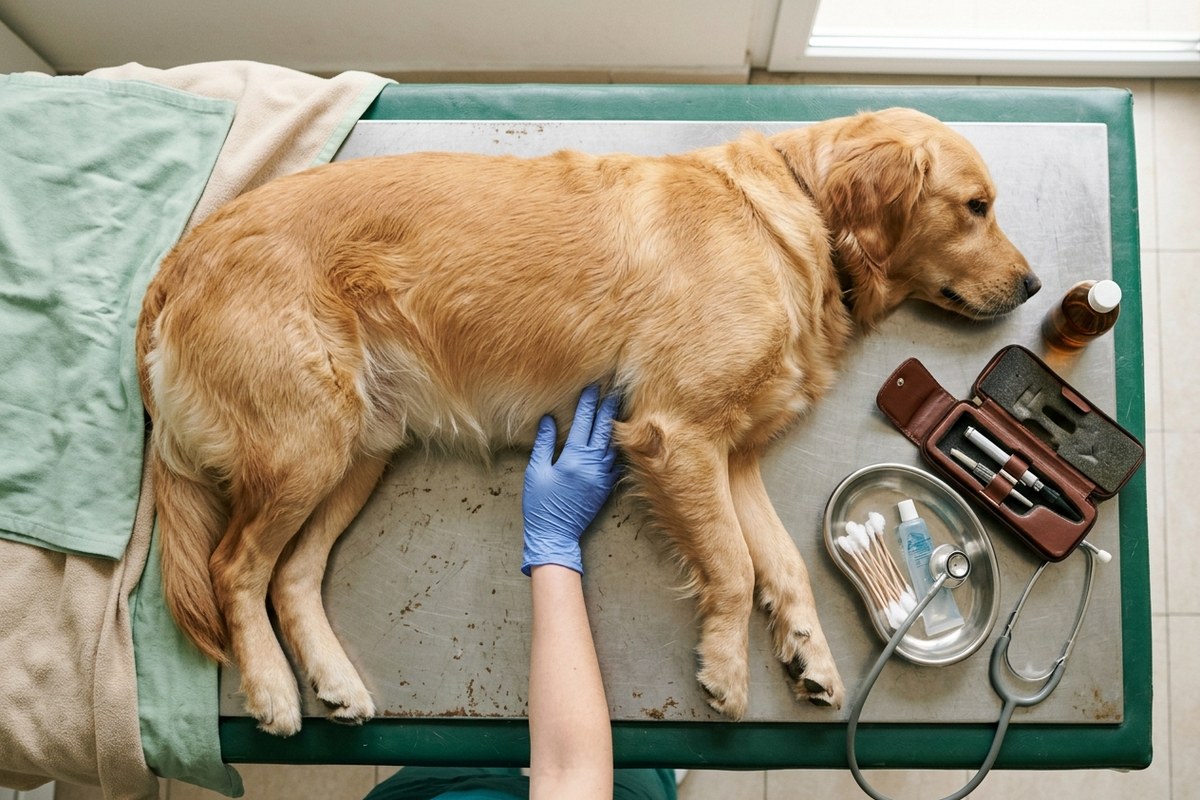
In 2026, the U.S. veterinary care sector employs more than 115,000 veterinary assistants across 30,000 animal hospitals, private practices, and research laboratories. As pet ownership in American households holds steady at 66 percent, demand for trained clinical support staff continues to grow across urban and rural veterinary facilities alike.
This guide outlines how to become a veterinary assistant, covering the 5 essential steps to enter the field, educational prerequisites, credentialing options, compensation data, and scope of practice boundaries. Job seekers will learn how to gain hands-on clinical experience, navigate certification pathways, and structure a competitive application for modern veterinary practices.
A veterinary assistant provides foundational clinical support, animal handling, and administrative assistance within veterinary hospitals, emergency clinics, and research facilities. Working directly under the supervision of licensed veterinarians and credentialed veterinary technicians, assistants manage routine care tasks that maintain clinical hygiene and operational workflow.
Veterinary assistants care for diverse animal patient populations, including dogs, cats, small mammals, exotic pets, and livestock. According to industry surveys, over 75 percent of a veterinary assistant's workday involves direct patient handling, sanitation of medical equipment, and assisting clinical staff during diagnostic procedures.
The daily veterinary assistant job duties span animal husbandry, surgical sanitation, exam room preparation, and client intake services. Assistants maintain strict sanitary standards by cleaning kennels, sterilizing surgical instruments in autoclaves, and disinfecting examination tables between patient visits.
Care activities performed by veterinary assistants include the following core duties:
A veterinary assistant splits working hours between hands-on clinical assistance and front-desk administrative duties depending on practice size. In smaller 2-doctor private practices, an assistant may devote 40 percent of their schedule to client communication, appointment booking, and inventory auditing.
Clinical support tasks include holding animals for diagnostic radiographs, recording patient temperature, pulse, and respiration (TPR) parameters, and monitoring post-operative patients during recovery. Administrative duties involve greeting clients in reception areas, maintaining electronic medical records (EMR), verifying rabies vaccination records, and processing pharmacy prescription orders.
Veterinary assistants work in diverse clinical environments, including companion animal hospitals, equine facilities, mobile veterinary units, livestock operations, and university research centers. Over 80 percent of veterinary assistants are employed in private veterinary services, while 10 percent work in scientific research laboratories.
Work schedules for veterinary assistants frequently exceed standard 40-hour workweeks and include weekend, evening, and holiday shifts. Emergency and critical care hospitals require 24-hour staffing, exposing assistants to rotating night schedules, high-intensity trauma cases, and fast-paced triage situations.
Entering the veterinary support field requires a structured combination of baseline education, hands-on clinical training, and professional certification. Most candidates complete the entry process within 3 to 12 months, depending on whether they select an accelerated training program or gain entry-level experience on the job.
The 5-step career roadmap below details the exact milestones required to transition from zero clinical experience to a working position in a credentialed animal healthcare facility.
A high school diploma or General Educational Development (GED) equivalent represents the baseline educational requirement for entry-level veterinary assistant roles. Employers screen candidates for secondary coursework in biology, chemistry, algebra, and computer literacy to ensure basic scientific comprehension.
High school students planning a veterinary career should complete at least 1 year of high school biology and 1 year of chemistry with a grade of C or higher. Maintaining a cumulative grade point average (GPA) above 3.0 provides a competitive advantage when applying to structured veterinary assistant training programs or college-level animal science certificates.
While some practices offer entry-level training, completing a formal veterinary assistant certificate program significantly accelerates career placement. Formal programs typically span 3 to 9 months and deliver 150 to 300 hours of didactic coursework paired with practical clinical laboratory sessions.
Enrolling in a program accredited by professional bodies ensures coverage of key topics, including veterinary medical terminology, animal anatomy, pharmacology math, surgical instrumentation, and zoonotic disease control. Tuition for certificate programs ranges from $1,200 for community college offerings to $3,500 for specialized online institutions.
Earning professional credentials validates clinical competence and sets job candidates apart in competitive employment markets. The National Association of Veterinary Technicians in America (NAVTA) approves over 65 veterinary assistant educational programs across high schools, community colleges, and online institutions, establishing a standardized national benchmark for clinical knowledge.
Graduates of NAVTA-approved programs qualify to sit for the Approved Veterinary Assistant (AVA) examination. According to NAVTA, the examination fee to take the Approved Veterinary Assistant (AVA) credentialing test via VetMedTeam is $100. The online exam consists of 100 multiple-choice questions covering restraint, safety, nursing care, and pharmacy procedures, requiring a passing score of 75 percent or higher within a 150-minute testing window.
Practical handling skills cannot be acquired through textbook study alone. Hiring managers prioritize candidates who possess a minimum of 100 to 200 hours of documented clinical externship or volunteer experience inside an operating veterinary facility.
Candidates can build hands-on competency by volunteering at municipal animal shelters, equine rescue facilities, wildlife rehabilitation centers, or small animal hospitals. Documenting specific clinical skills, such as restraining 50-pound canines for venipuncture or operating an autoclave, demonstrates immediate job readiness to prospective employers. Applicants preparing for job interviews can utilize a professional veterinary assistant resume template to present their clinical hours and skills clearly to practice managers.
A successful job application requires a resume tailored specifically to veterinary practice needs. Hiring managers screen applications for technical skills, handling certifications, OSHA safety compliance knowledge, and practice management software experience.
Candidates should quantify their accomplishments on their resume, highlighting metrics such as managing 25 patient kennels daily, assisting in 10 surgical procedures weekly, or maintaining 99 percent accuracy in inventory entry. Job seekers can consult an ATS-friendly resume formatting guide to ensure their application bypasses automated software filters and reaches practice managers.
Veterinary assistant education pathways vary from high school diplomas paired with on-the-job instruction to specialized national certification programs. Selecting the right educational track depends on an individual's career goals, target work environment, and timeline for entering the workforce.
Evaluating credential options allows candidates to align their training with industry requirements, whether seeking employment in small animal private practices or biomedical research laboratories.
The minimum entry requirement across 90 percent of general veterinary practices is a high school diploma or GED certificate. Practices in rural or high-demand areas frequently hire entry-level assistants without prior formal post-secondary education, providing informal on-the-job training over 3 to 6 months.
On-the-job training tracks allow assistants to earn an entry-level hourly wage while learning restraint techniques, facility sanitation, and customer service. However, uncredentialed assistants generally start at the lower end of the wage scale and face longer timelines to achieve promotions or wage increases compared to certified peers.
The Approved Veterinary Assistant (AVA) designation represents the national standard for clinical veterinary support professionals. NAVTA offers three distinct pathways to earn the AVA designation, accommodating different educational and work backgrounds.ю
Designees must maintain their AVA credential by completing 20 hours of continuing education (CE) every 2 years and submitting a $10 renewal fee to NAVTA, ensuring ongoing clinical competency.
For individuals seeking employment in research laboratories, pharmaceutical companies, or university animal care facilities, specialized laboratory animal certification is essential. The American Association for Laboratory Animal Science (AALAS) offers the Assistant Laboratory Animal Technician (ALAT) certification as the primary entry-level credential for lab animal care.
The ALAT examination assesses candidate knowledge in laboratory animal husbandry, facility sanitation, occupational health and safety, and animal welfare regulations under the Animal Welfare Act. Candidates must possess a high school diploma plus 0.5 years of laboratory animal experience, or complete a college animal technology program, to qualify for the 120-question certification exam.
Understanding compensation rates and long-term industry projections helps prospective veterinary assistants evaluate career viability across different regions and practice types. Compensation varies significantly based on geographic location, professional certification status, shift differentials, and clinical practice specialty.
According to data published by the U.S. Bureau of Labor Statistics, the median annual wage for veterinary assistants and laboratory animal caretakers was $37,320 ($17.94 per hour). Earnings distribution across the profession reflects entry-level baseline wages through top-tier specialty rates:
Wages for veterinary assistants vary by industry sector. Federal government facilities and scientific research institutions pay the highest salaries in the field, while private companion animal practices pay rates closer to the national median.
Data from the U.S. Bureau of Labor Statistics indicates the following mean annual wages across major employer categories:
Geographic location impacts earnings potential significantly. States with the highest mean annual wages for veterinary assistants include California ($44,210), Washington ($43,850), Massachusetts ($43,110), and New York ($42,490), driven by elevated living costs and strict state animal care regulations.
Employment of veterinary assistants and laboratory animal caretakers is projected to grow 9 percent from 2024 to 2034, faster than the average for all occupations, according to the U.S. Bureau of Labor Statistics. This growth rate will generate approximately 15,300 opening opportunities each year over the decade.
Market expansion is driven by increasing consumer spending on pet care, advancements in veterinary medical technology, and growing demand for specialized treatments such as oncology, cardiology, and orthopedics. Practice managers rely increasingly on skilled assistants to manage routine tasks, allowing licensed veterinarians and technicians to focus on surgical and diagnostic procedures.
Understanding the distinction between a veterinary assistant and a veterinary technician is critical for individuals mapping an animal healthcare career. While both roles work closely to deliver patient care, they differ substantially in educational requirements, licensing, scope of practice, and compensation.
According to the American Veterinary Medical Association (AVMA), veterinary technicians must complete a 2-year CVTEA-accredited associate degree and pass the VTNE, whereas veterinary assistants enter primarily with a high school diploma and on-the-job training.
Veterinary assistants complete high school or a 3-to-9-month certificate program, earning voluntary credentials like the AVA. They are not licensed by state veterinary boards and are not required to pass state board examinations to practice.
In contrast, veterinary technicians complete a 2-year Associate of Applied Science (AAS) degree in Veterinary Technology accredited by the AVMA Committee on Veterinary Technician Education and Activities (CVTEA). Graduates must pass the 170-question Veterinary Technician National Examination (VTNE) administered by the American Association of Veterinary State Boards (AAVSB) and obtain state licensure (RVT, LVT, or CVT).
State veterinary practice acts establish strict legal boundaries separating assistant duties from technician duties. Veterinary assistants perform non-invasive support functions under direct supervision, including animal restraint, feeding, kennel sanitation, and gathering medical supplies.
Licensed veterinary technicians perform invasive medical procedures under direct or indirect veterinary supervision. Technicians are authorized to administer controlled drugs, place intravenous (IV) catheters, induce and monitor general anesthesia, perform dental prophylaxis, take diagnostic radiographs, and execute complex laboratory diagnostics.
The table below provides a side-by-side comparison of career parameters between veterinary assistants and veterinary technicians in 2026:
Practice managers look for candidates possessing a balance of technical proficiency, animal handling capabilities, interpersonal communication, and digital competency. Demonstrating these skills during interviews helps candidates secure positions in high-volume practices.
As veterinary medicine adopts digital management systems, candidates with technical capabilities and software skills stand out during the screening process.
Technical skill screening focuses heavily on safe handling and surgical asepsis. Practice managers evaluate candidates on their ability to restrain anxious or aggressive animals safely, protecting both the patient and clinical personnel from injury.
Essential technical skills screened by employers include:"
Veterinary clinical work exposes staff to emotional situations, including trauma care, terminal diagnoses, and owner grief. Hiring managers look for candidates with strong stress tolerance, emotional resilience, and active listening skills.
Clear communication is critical when explaining home care instructions to pet owners, taking medical histories during intake, or relaying patient status updates to attending veterinarians. Assistants must maintain professional composure when de-escalating tense client interactions or assisting during euthanasia procedures.
Modern veterinary practices rely on practice management software (PMS) to streamline clinical workflows and client communications. Over 70 percent of practices utilize digital systems like Cornerstone, AVImark, eVetPractice, or Vetspire for operational management.
In 2026, practices increasingly adopt automated AI scheduling tools, digital client intake kiosks, and smart inventory management systems. Veterinary assistants who demonstrate proficiency in electronic health record (EHR) data entry, digital invoicing, and automated appointment confirmations reduce administrative overhead for clinical teams.
Becoming a veterinary assistant takes between 3 and 12 months. Candidates choosing on-the-job training can start immediately after high school. Those enrolling in formal certificate programs complete 150 to 300 hours of coursework over 3 to 9 months before taking the AVA exam.
Veterinary assistants do not need a state license to work in veterinary practices. State boards regulate veterinary technicians and veterinarians rather than assistants. However, earning voluntary credentials like the NAVTA Approved Veterinary Assistant (AVA) designation increases employment opportunities and hourly pay rates.
Veterinary technicians complete a 2-year AVMA-accredited associate degree, pass the VTNE national exam, and hold state licenses to perform invasive care like anesthesia induction and radiography. Veterinary assistants enter with a high school diploma, focusing on restraint, sanitation, feeding, and administrative support.
According to the U.S. Bureau of Labor Statistics, the median hourly wage for veterinary assistants is $17.94, equal to $37,320 annually. Hourly pay ranges from $13.07 for entry-level positions to over $24.10 for experienced laboratory animal technicians and specialized surgical assistants.
Yes, a veterinary assistant can transition to a veterinary technician by completing an AVMA-accredited 2-year degree program. Many working assistants enroll in accredited online veterinary technology programs, using their current clinic employment to complete required clinical externship hours while earning full wages.
Becoming a veterinary assistant offers a fast, accessible pathway into animal healthcare, combining hands-on patient care with vital clinical support. By gaining baseline education, earning NAVTA AVA certification, building practical restraint skills, and presenting a professional resume, job seekers can launch a rewarding career in companion animal hospitals, emergency centers, or research facilities.